
 Face
FaceCan You Really Tighten Saggy Skin Without Surgery?
What non-surgical RF and LED skin tightening may and may not do for sagging skin, and a simple way to decide whether it is worth trying before surgery.
Read the guide
Face · 5 min read
A realistic plan of four to six sessions, the progress check after session three, the three reasons to stop, and how to hold the look afterward.
Skin Tightening · From $250 · 60 min
How many skin tightening sessions does it take? A typical starting point is four to six sessions, spaced one to two weeks apart, followed by maintenance roughly monthly. We plan that series in two halves. The first three sessions build a baseline. Then we stop and check progress together before booking the rest. That is a plan, not a promise. Results vary with age, skin thickness, sun history, and how consistently you return. Some clients decide at the midpoint that three sessions are enough for them. Others want the full six before they judge.
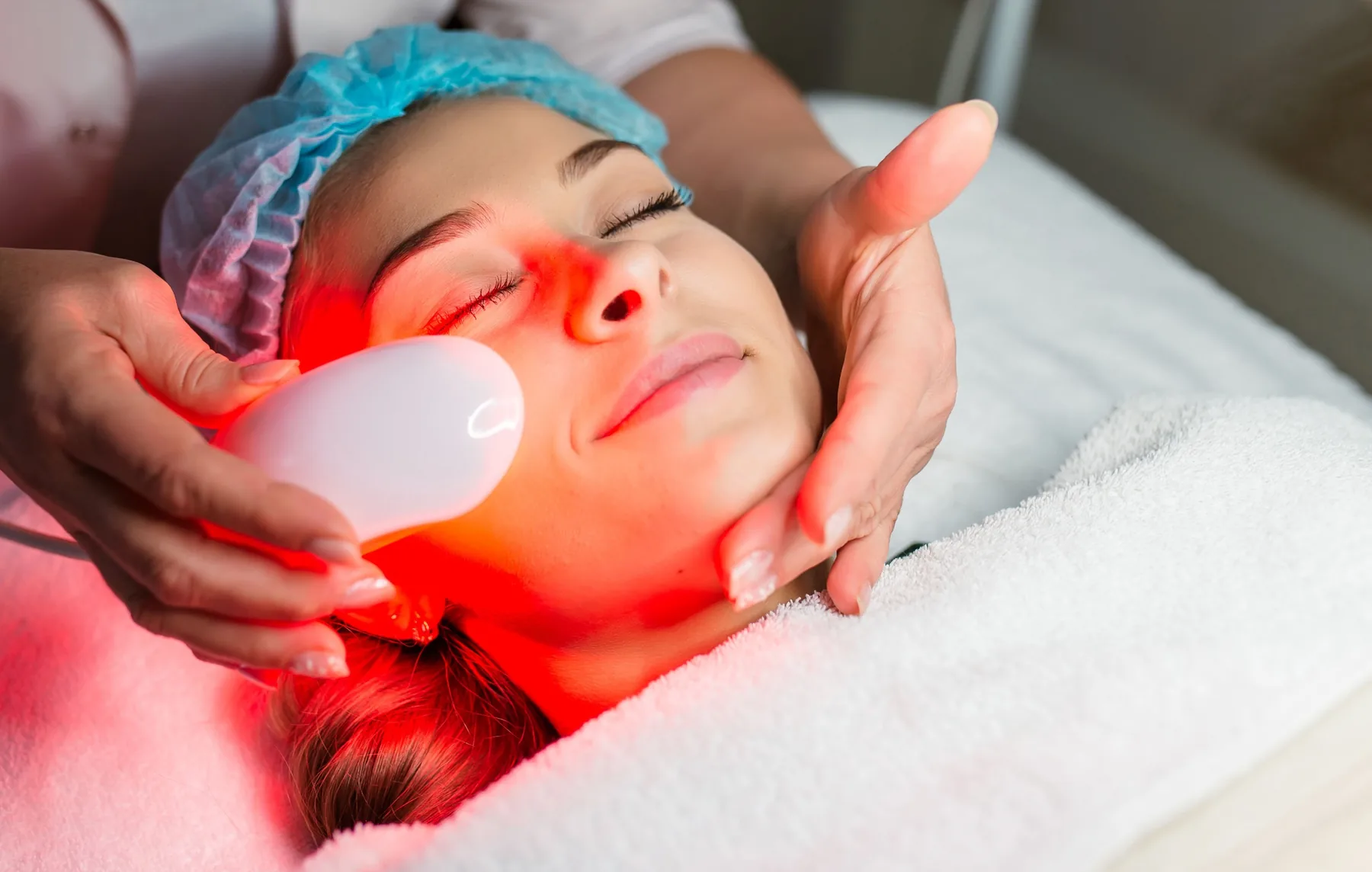
We offer skin tightening two ways at our Hulen Mall spa in Fort Worth. The LED Skin Tightening Facial uses the Perfectio X, with red and infrared light, and the Sapphire X, which delivers blue light at 415 nm. Both are FDA-cleared Class II devices. The clearance covers the device, not a result. The RF Face and Neck Facial uses radio-frequency warmth followed by a 24K gold and black caviar mask. Each is 60 minutes and $250. The session plan below applies to both, though we may suggest one over the other after seeing your skin. You can compare them on our skin tightening page.
Progress with skin tightening is subtle enough that memory alone is not a reliable guide. That is why we rely on three things. The first is a baseline photo. We suggest you take one at home before your first visit, in daylight, without filters, at an angle you can repeat, and then take another the same way after session three. The second is your own account. At each visit we ask what you have noticed, what has not changed, and whether anything felt uncomfortable. The third is what your aesthetician sees and feels during the treatment, including how the skin responds to warmth or light compared with earlier visits.
We take stock after session three and again at the end of the series. If we see no change at all at the midpoint, we will say so. Sometimes a different treatment is a better fit. Sometimes the concern is structural, such as loose skin under the chin that comes from the tissue beneath, and a facial cannot change that. In that case a dermatologist or physician is the right first step, and we would rather tell you than book three more sessions that may not help.
There are three good reasons to stop a series. The first, and the best, is that you are happy. The look has reached a point you like, and further sessions are unlikely to add much. The second is that you have completed six sessions and see little change. More of the same is not the answer; a different approach is. The third is any ongoing irritation, which is uncommon but worth taking seriously. Persistent redness, stinging, or sensitivity after sessions means we pause and reassess together.
The reason to keep going is simpler. If you can see progress and it has not leveled off, the series is still doing its work. If your aesthetician notes that the skin is responding and you want more, a session or two beyond six is reasonable. We know of no benefit to going far past that in a single run. At some point, maintenance is the better use of your time and money.
A skin tightening facial is not a single event with a single outcome. Each session delivers a modest amount of light or warmth to the skin, and the skin responds over the following days, not only during the hour in the chair. Many clients notice that their skin looks brighter and a little firmer immediately afterward, partly from circulation and the mask, and that this early effect softens within a few days. The more settled change, if it comes, tends to show after several sessions.
This is why spacing matters. Sessions one to two weeks apart during the opening series are meant to let each visit build on the last, rather than letting the look fade in between. It is also why we discourage booking all six sessions in one week. Tighter spacing does not appear to speed things up, and it may raise the chance of lingering pinkness on sensitive skin.
Session one is partly an assessment. Your aesthetician will look at your skin, ask about your goals, and note where laxity is most visible, often along the jaw, under the chin, or on the neck. That note becomes the reference point for the midpoint check.
Sessions two and three follow the same structure each time: cleanse, prepare the skin, the LED or RF portion, then a mask or serum and finishing products. We keep the settings consistent so any change you see is easier to read. Then comes the check.
Sessions four through six are a refinement stage. If the look has settled and you are happy, we may suggest stopping early and moving to maintenance. If your skin is responding slowly, we may suggest finishing the sixth session before deciding. Either way, we will tell you what we see rather than simply booking the next visit.
Once the opening series is done, the look fades gradually without upkeep. A common maintenance rhythm is roughly monthly; some clients stretch to two months. The right rhythm is the one where you book your next visit before you notice the change slipping, not after.
Daily habits matter as much as the sessions. Sunscreen every morning, including on the neck, does more than any other habit to protect whatever look you have built. The Texas sun makes that more than a suggestion. Gentle cleansing, a basic moisturizer, and not overdoing exfoliation at home all help. If you choose one of our facial packages, each includes daily products chosen to support LED facials between visits.
At $250 per session, a six-session opening series is $1,500 booked one visit at a time. Our facial packages bundle LED facials with daily products at a similar per-facial price; the math is on our packages page. RF Face and Neck sessions are not part of a package and are booked per visit at $250. Affirm financing is available, and services are not refundable, so we suggest a single session before committing to a package.
Skin tightening facials are cosmetic services, not medical care. If you are pregnant, have a pacemaker, have cold urticaria, have an active skin infection, or have had recent surgery, talk to your physician before booking. If you have a skin condition such as rosacea, melasma, or eczema, a dermatologist is the right first step, and we are glad to work alongside their advice. If none of that applies, come in for a first session and we will assess together.
Many clients notice a brighter, slightly firmer look right after a session, partly from circulation and the mask. That early effect usually softens within a few days. A more settled change, if it comes, tends to show after several sessions. Results vary.
Both are 60 minutes and $250, and we use the same session plan for each. LED often suits clients who also want a brighter, more even look. RF suits clients who prefer a warm, massage-like treatment with the gold and caviar mask. Your aesthetician will suggest one after seeing your skin.
Yes. Some clients alternate the two across a series, and your aesthetician can suggest an order after seeing your skin. The session count and spacing stay the same. Facial packages cover LED facials only, so alternating is simpler when you pay per visit at $250 each.
Treatments at Vearitea Wellness Spa are cosmetic and wellness services, not medical care, and are not intended to diagnose, treat, cure or prevent any disease. Results vary from person to person. If you are pregnant, have a pacemaker, cold urticaria, an active skin infection, or have had recent surgery, talk to your physician before booking.
If you would like to find out whether a skin tightening series may suit your skin, book a first session and we will assess together.
Keep reading
FaceWhat non-surgical RF and LED skin tightening may and may not do for sagging skin, and a simple way to decide whether it is worth trying before surgery.
Read the guide
FaceOur RF Face & Neck Facial at Hulen Mall is $250 for 60 minutes. What the hour includes, how a series changes the math, and how to read cheaper RF prices.
Read the guide
FaceWhy the face, neck, and décolletage are best considered together, how thinner skin is typically treated, and what each area can realistically show.
Read the guide